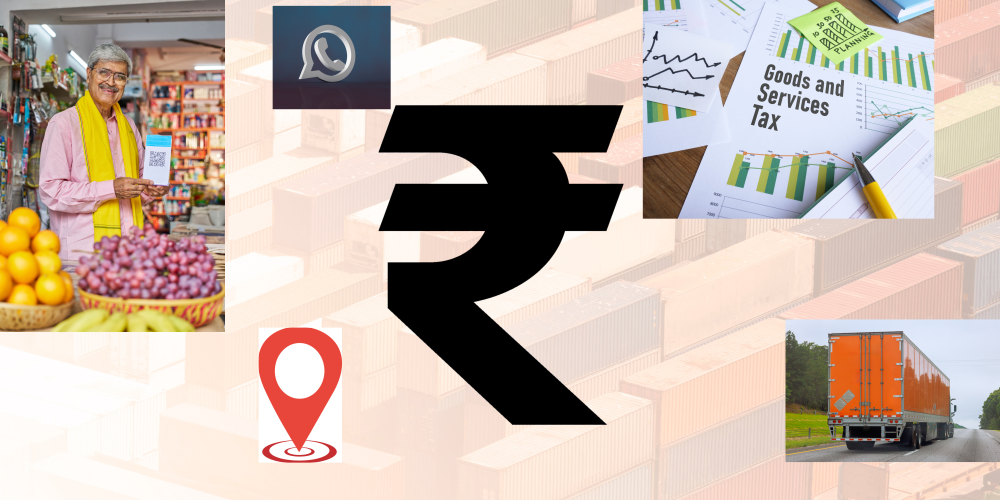
“Works in India” and “built for India” are not the same thing. Most global platforms are India-adapted — they bolt on plugins to cover GST, UPI and Indian shipping. QuicShop is India-first — those things are part of the product. That difference quietly shapes your cost, your setup time, and how often things break.
Adapted: India as an add-on
On an adapted platform, the core was designed for other markets, and India is handled by third parties:
- GST invoicing is a paid app
- UPI comes through a separate gateway
- Indian couriers need an integration app
- WhatsApp and DLT SMS are yet more tools
Each works in isolation, but they’re stitched together — separate bills, separate logins, separate support, and edge cases where one app doesn’t quite know what another is doing.
First: India in the foundation
On QuicShop, the same capabilities are native:
- GST invoices generate automatically, with the right HSN codes and CGST/SGST/IGST split
- UPI, cards, UPI QR and COD are built into checkout
- Shiprocket and Delhivery are part of fulfilment, with rate comparison
- WhatsApp and DLT-compliant SMS are part of notifications
Because it’s one system, the pieces understand each other — an order’s GST, payment, shipping label and customer message all come from the same place.
Why the difference shows up
- Cost — built-in features don’t each carry an app subscription. (See the savings breakdown.)
- Reliability — fewer moving parts means fewer things to break or fall out of sync.
- Setup speed — you configure one platform, not assemble a toolkit.
- Fit — features are designed around Indian rules and buyer behaviour, not retrofitted to them.
The takeaway
If India is your market, an India-first platform isn’t a nice-to-have — it’s the difference between a store that works the way India sells and one you’re constantly patching. That’s the bet QuicShop is built on. See what that looks like.
Frequently asked
What does "India-first" actually mean?
It means GST, UPI, Indian shipping, COD, DLT-compliant SMS and WhatsApp are core parts of the product — designed in from the start — rather than third-party plugins added on top.
Why can't a global platform just add these?
They can add them as apps, but the seams show — separate billing, separate support, and features that don't fully understand Indian rules. Built-in beats bolted-on for reliability and cost.